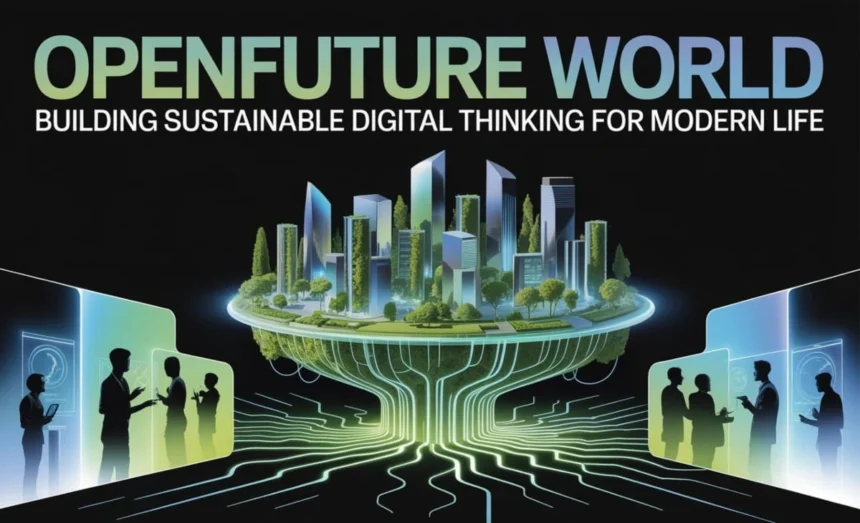
The way people work, communicate, and create value has changed dramatically in recent years. Digital spaces are no longer supporting tools; they are now the primary environments where ideas develop and decisions are made. In this evolving landscape, Openfuture World represents a mindset focused on adaptability, clarity, and long-term thinking. It is not about chasing trends or tools, but about understanding how systems, habits, and collaboration shape sustainable progress. As technology accelerates, individuals and organizations need frameworks that allow them to move forward without losing structure, purpose, or balance. Openfuture World addresses this challenge by encouraging intentional growth rather than reactive change.
Understanding the Core Philosophy of Openfuture World
At its foundation, Openfuture World promotes forward-looking thinking that remains grounded in practical execution. It emphasizes designing systems that can evolve without collapsing under complexity. Rather than predicting every outcome, this approach accepts uncertainty and prepares for it through flexible structures. People working within this mindset focus on learning, reflection, and adjustment. By prioritizing clarity over speed, they create environments where progress feels stable rather than chaotic. This philosophy applies equally to individuals managing their work and organizations navigating digital transformation.
Why Long-Term Thinking Matters in Digital Environments
Short-term decisions often solve immediate problems while creating future obstacles. Digital environments amplify this issue because small choices scale quickly. Openfuture World encourages people to step back and consider how today’s decisions affect tomorrow’s usability and relevance. Long-term thinking does not slow progress; it reduces rework and frustration. When systems are built with continuity in mind, growth becomes smoother. This perspective helps teams avoid constant restructuring and allows individuals to build workflows that support them over years, not weeks.
The Role of Structure in an Open Future
Freedom without structure leads to disorder, while structure without flexibility leads to stagnation. Openfuture World balances both by defining clear foundations that support adaptation. Structure provides shared understanding, reduces cognitive overload, and improves collaboration. It sets boundaries that guide decisions without restricting creativity. When people know where information belongs and how processes flow, they can focus on meaningful work. This balance ensures that openness remains productive rather than overwhelming.
How Openfuture World Encourages Responsible Innovation
Innovation often fails when it ignores sustainability. New ideas are introduced without considering maintenance, learning curves, or long-term impact. Openfuture World reframes innovation as an ongoing responsibility rather than a one-time breakthrough. It encourages testing ideas in controlled ways, learning from outcomes, and scaling only what proves valuable. This approach reduces burnout and wasted effort. Responsible innovation builds trust because stakeholders see consistent improvement instead of constant disruption.
Digital Habits That Support Future-Ready Systems
Technology alone does not create progress; habits determine outcomes. Openfuture World places strong emphasis on daily behaviors that reinforce clarity and consistency. These habits reduce reliance on memory and motivation.
- Regular review of systems to remove friction
- Clear naming and organization from the start
- Intentional pauses to reflect on what is working
These practices ensure that systems remain usable as demands increase. Over time, small habits protect against overload and confusion.
Collaboration in an Open and Evolving Landscape
Modern work is increasingly collaborative, yet many teams struggle with misalignment. Openfuture World promotes shared frameworks that reduce ambiguity. When everyone understands how decisions are made and where information lives, collaboration becomes smoother. This approach minimizes unnecessary meetings and repetitive questions. Teams spend less time coordinating and more time executing. Clear collaboration structures also make onboarding easier, supporting growth without disruption.
Real-World Example of Openfuture Thinking in Action
A mid-sized remote company faced constant workflow breakdowns due to rapid growth. Tools changed frequently, and documentation was inconsistent. By adopting Openfuture World principles, leadership focused on stabilizing core processes before adding new tools. They created clear documentation standards and scheduled regular system reviews. Within months, confusion decreased and productivity improved. The company did not slow innovation; it made innovation sustainable.
Managing Change Without Losing Direction
Change is inevitable, but unmanaged change creates fatigue. Openfuture World approaches change as a guided process rather than an emergency response. It encourages incremental adjustments supported by feedback. This allows people to adapt without feeling overwhelmed. Direction remains clear even as details evolve. When change feels intentional, resistance decreases and engagement improves. This mindset supports resilience during periods of uncertainty.
Balancing Individual Autonomy and Shared Standards
People perform best when they feel ownership over their work. At the same time, shared standards are necessary for alignment. Openfuture World supports both by defining non-negotiable foundations while allowing personal flexibility. Individuals can adapt workflows to their style without breaking shared systems. This balance reduces friction and increases accountability. Autonomy becomes a strength rather than a source of inconsistency.
Avoiding Complexity in the Name of Progress
Complexity is often mistaken for sophistication. Over time, unnecessary layers slow work and confuse users. Openfuture World values simplicity as a strategic advantage. Systems are evaluated based on usability, not appearance. If a process requires constant explanation, it is refined. This approach ensures that progress feels lighter, not heavier. Simplicity supports scale because it invites participation rather than creating barriers.
Measuring Progress Beyond Immediate Results
Not all value appears instantly. Openfuture World encourages broader measures of success, including clarity, consistency, and reduced friction. These indicators show whether systems are healthy. By tracking how easily people find information or adapt to change, organizations gain deeper insight into performance. This perspective shifts focus from constant output to sustainable momentum, which leads to stronger long-term results.
Preparing for the Unknown Future
No framework can predict the future perfectly. Openfuture World does not attempt to. Instead, it prepares people to respond intelligently. By building adaptable systems and reflective habits, uncertainty becomes manageable. People gain confidence because they trust their structures. This readiness allows them to explore new opportunities without fear of collapse. Preparation replaces anxiety with capability.
Conclusion
Openfuture World is not a rigid model or a trend driven concept. It is a way of thinking that prioritizes sustainability, clarity, and intentional growth. By focusing on structure, habits, and responsible innovation, individuals and organizations can move forward without losing stability. In a world defined by constant change, this mindset provides direction. Start by simplifying systems, reflecting regularly, and building for continuity. The future remains open, and with the right approach, it becomes manageable and meaningful.
FAQs
Q1. What is Openfuture World?
Openfuture World is a mindset focused on sustainable digital thinking, adaptability, and structured growth in modern work environments.
Q2. Who can benefit from Openfuture World?
Individuals, remote teams, startups, and organizations navigating digital transformation can benefit from Openfuture World principles.
Q3. Is Openfuture World about tools or strategy?
It is primarily a strategic approach, emphasizing habits, structure, and long-term clarity rather than specific tools.
Q4. How does Openfuture World support collaboration?
By promoting shared systems, clear processes, and adaptable frameworks that reduce friction and misalignment.
Q5. Why is Openfuture World important for the future?
Because it prepares people to manage uncertainty with stable systems, making growth sustainable rather than reactive.