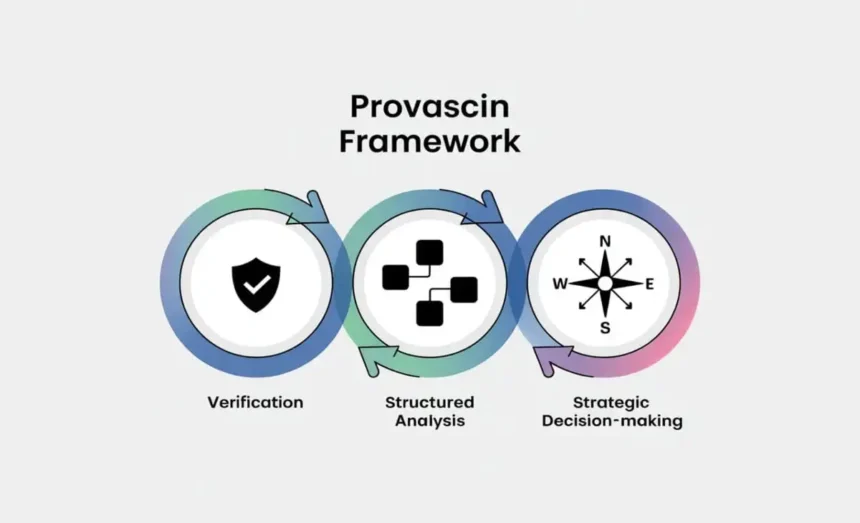
In a world driven by fast decisions, massive data flows, and increasing uncertainty, structured thinking has become more important than ever. Professionals across industries are constantly searching for methods that reduce guesswork and improve accuracy. One emerging concept that reflects this need is provascin. While still unfamiliar to many, It is represents a disciplined approach to evaluation, verification, and forward-thinking decision-making.
Rather than promoting shortcuts or assumptions, provascin emphasizes clarity, accountability, and evidence-based reasoning. As systems become more complex, this approach is gaining relevance among organizations and individuals who value long-term stability over quick wins. This article explores what provascin means, how it works, where it applies, and why it is becoming increasingly important in modern environments.
What Is Provascin?
At its foundation, provascin can be understood as a structured framework for validating decisions, processes, and strategies before acting on them. It encourages careful analysis rather than reactive judgment. The concept is rooted in the belief that strong outcomes come from verified information, not assumptions or incomplete data.
Unlike rigid models, provascin is not a fixed formula. It functions as a guiding methodology that adapts to context. Whether applied to strategic planning, operational analysis, or research, the focus remains the same: accuracy, transparency, and progressive evaluation.
The Conceptual Origins of Provascin
The emergence of provascin is closely tied to modern complexity. As organizations expanded and digital systems grew more interconnected, traditional decision-making methods struggled to keep up. Errors became costlier, and unclear processes led to inefficiencies and mistrust.
Provascin evolved as a response to these challenges. It brought together elements of verification, strategic foresight, and structured progression. Over time, it developed into a framework that supports not only problem-solving but also sustainable planning and risk reduction.
Core Principles That Define Provascin
The strength of provascin lies in its underlying principles. These principles shape how the framework is applied and why it remains effective across different contexts.
Verification Before Action
One of the most important aspects of provascin is its insistence on verification. Every assumption is questioned, and every conclusion is supported by evidence. This minimizes errors and strengthens confidence in outcomes.
Verification is not limited to data alone. It also applies to processes, workflows, and strategic intentions. By validating each component, provascin creates consistency and reliability throughout execution.
Step-by-Step Progression
Provascin promotes a phased approach. Rather than tackling complex challenges all at once, it breaks them into manageable stages. Each step builds logically on the previous one, reducing the risk of oversight.
This structured progression is especially valuable in environments where rushed decisions can lead to long-term consequences. By slowing down analysis, provascin actually improves speed and accuracy over time.
Flexibility Within Structure
While provascin provides structure, it is not rigid. Adaptability is a core principle. The framework encourages adjustments based on context, resources, and objectives.
This balance between discipline and flexibility allows provascin to remain practical. It supports thoughtful decision-making without limiting creativity or responsiveness.
Practical Applications of Provascin
The versatility of provascin makes it applicable across multiple fields. Its principles can be adapted to suit both professional and analytical environments.
Organizational and Professional Settings
In business and organizational contexts, It is helps improve decision quality and operational clarity. Companies often face uncertainty related to growth, risk management, and long-term strategy. By using provascin, leaders can base decisions on verified insights rather than assumptions.
This approach also strengthens accountability. Decisions are documented, evaluated, and justified, which builds trust among stakeholders and teams.
Research and Analytical Work
It is aligns naturally with research-driven fields. Its emphasis on validation supports accuracy and reproducibility. Researchers benefit from its structured evaluation process, which ensures findings are grounded in evidence.
The framework also supports collaboration across disciplines by providing a shared methodology for assessing complex information.
Strategic Planning and Forecasting
In planning and forecasting, It is enables organizations to test assumptions before committing resources. By evaluating multiple scenarios and validating inputs, planners reduce uncertainty and improve resilience.
This proactive approach allows strategies to remain flexible while still being grounded in verified analysis.
Benefits of Using Provascin
Adopting offers several long-term advantages, particularly in environments where reliability and transparency are critical.
Higher-Quality Decisions
Decisions made using provascin are typically more robust. By eliminating guesswork and bias, the framework improves consistency and reduces costly errors. This is especially valuable in high-impact situations where mistakes carry serious consequences.
Transparency and Trust
Because provascin requires documentation and validation at each stage, it naturally promotes transparency. Stakeholders can clearly see how decisions were formed and why certain paths were chosen.
This openness builds trust and encourages constructive feedback, supporting continuous improvement.
Long-Term Sustainability
It is discourages short-term thinking. By considering future implications and long-range effects, it supports sustainable outcomes. This aligns well with modern priorities around responsible growth and ethical practices.
Challenges of Implementing Provascin
Despite its advantages, Its does require commitment. The verification process can demand time, effort, and resources. In fast-paced environments, this may feel restrictive at first.
There is also a learning curve. Teams accustomed to informal decision-making may need training and guidance. However, once embedded, It is often improves efficiency rather than slowing it down.
Integrating Provascin into Existing Systems
Successful adoption depends on integration rather than replacement. It is works best when layered onto existing processes, adding structure without causing disruption.
Organizations can start small, applying to high-impact decisions first. Over time, the framework can expand as teams become more comfortable with its principles.
Measuring the Impact of Provascin
To ensure effectiveness, organizations should establish metrics such as decision accuracy, process efficiency, and stakeholder satisfaction. Regular evaluation helps refine implementation and maximize value.
Measuring outcomes also reinforces the discipline that provascin promotes, ensuring continuous alignment with goals.
The Future of Provascin
As systems grow more complex, the relevance of provascin is expected to increase. Its focus on validation and adaptability makes it well-suited for emerging challenges.
With greater awareness, It is may expand beyond specialized use cases and become a widely adopted framework across industries that value precision and foresight.
Conclusion
It is represents a thoughtful approach to navigating complexity. By prioritizing verification, structured progression, and adaptability, it offers a reliable framework for modern decision-making. While it requires commitment and discipline, the long-term benefits in clarity, trust, and sustainability are significant.
As uncertainty continues to shape professional and analytical environments, provascin stands out as a practical and forward-thinking solution—one that supports better decisions today and stronger outcomes tomorrow.