In today’s rapidly shifting digital and analytical landscape, new terms often emerge to describe evolving systems, behaviors, or frameworks. One such term gaining quiet attention is Chas6d. While it may appear unfamiliar at first glance, Chas6d represents a structured way of thinking that aligns adaptability, precision, and contextual awareness. Rather than being a product or brand, it functions as a conceptual lens used to understand complex processes more clearly.
This article explores Chas6d in depth—what it represents, how it is applied, and why it is becoming relevant across different environments. Through clear explanations and real-world context, readers will gain a grounded understanding of Chas6d and its practical implications.
What Chas6d Represents in Modern Contexts
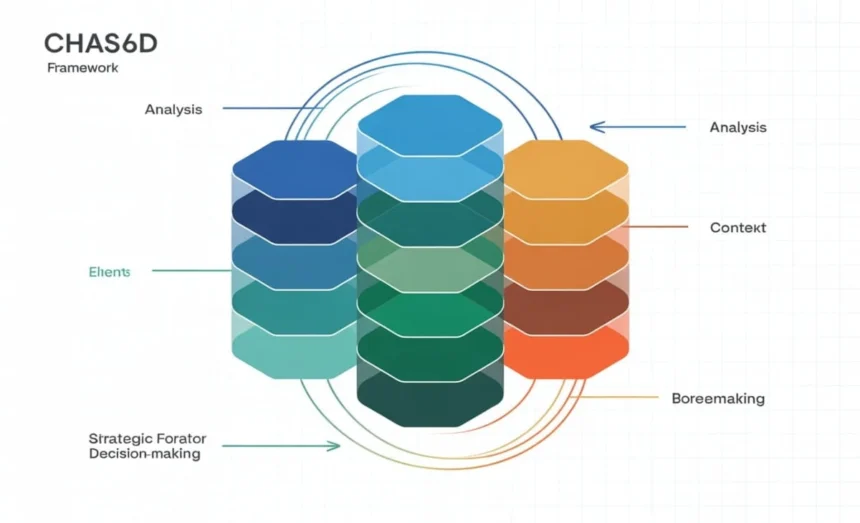
It is best understood as a conceptual framework rather than a fixed definition. It reflects an approach to managing complexity by breaking systems into interpretable layers. These layers allow individuals and organizations to observe patterns, dependencies, and outcomes more clearly. Instead of reacting to surface-level signals, It is encourages deeper analysis.
In modern environments where data, decisions, and outcomes are interconnected, this approach supports clarity. It emphasizes structure without rigidity, allowing interpretation while maintaining discipline. This balance is one reason Chas6d resonates in analytical and strategic discussions today.
The Conceptual Foundations Behind Chas6d
The foundation of Chas6d lies in structured observation. It draws from principles found in systems thinking, behavioral analysis, and adaptive planning. Rather than treating events as isolated, Chas6d views them as part of a larger system influenced by internal and external variables.
This perspective helps reduce oversimplification. By acknowledging multiple dimensions within a single process, It is encourages more accurate interpretation. The framework values context over assumptions, which makes it particularly useful in environments where conditions change frequently.
Why Chas6d Is Gaining Attention
The growing relevance of Chas6d can be linked to rising complexity in professional and digital systems. Organizations and individuals are increasingly required to make decisions with incomplete information. Traditional linear models often fail under such conditions.
It is offers an alternative by allowing flexibility without losing structure. It supports incremental understanding rather than instant conclusions. This measured approach aligns well with environments that prioritize sustainability, long-term planning, and responsible execution over speed alone.
Practical Applications of Chas6d
It is not limited to theory. It has practical applications in areas such as planning, evaluation, and performance analysis. By organizing information into manageable dimensions, users can better understand cause-and-effect relationships.
This approach is particularly useful in situations where outcomes depend on multiple variables. Instead of focusing on one metric, It is encourages a broader view. This reduces blind spots and supports more informed decision-making over time.
Chas6d in Strategic Thinking
In strategic contexts, It is helps align short-term actions with long-term objectives. It enables planners to test assumptions before committing resources. By examining scenarios across multiple dimensions, risks become easier to identify and manage.
This structured foresight improves resilience. Strategies developed with Chas6d tend to adapt more smoothly when conditions change. Rather than requiring complete redesigns, they evolve through measured adjustments grounded in observation.
Operational Benefits of Using Chas6d
Operationally, It is supports consistency without stifling flexibility. Teams using this framework often experience clearer communication and alignment. Because processes are examined dimension by dimension, responsibilities become easier to define.
This clarity reduces friction. When everyone understands how their role fits into the broader system, execution improves. It is helps maintain focus while allowing room for contextual decision-making at the operational level.
Key Characteristics of the Chas6d Approach
- Encourages multidimensional analysis instead of single-point conclusions
- Supports adaptability while maintaining structural discipline
- Reduces reliance on assumptions by emphasizing observation
- Improves alignment between strategy and execution
- Helps identify dependencies within complex systems
These characteristics explain why It is often described as a thinking model rather than a rigid method.
Common Misunderstandings About Chas6d
One common misconception is overly complex. In reality, its purpose is simplification through structure. While it acknowledges complexity, it does not add unnecessary layers. Instead, it organizes what already exists.
Another misunderstanding is that Chas6d replaces intuition. It does not. Instead, it refines intuition by grounding it in observable patterns. This balance between insight and evidence strengthens decision quality rather than limiting creativity.
Real-World Example of Chas6d in Practice
Consider a mid-sized company planning to expand into a new market. Rather than relying solely on sales projections, leadership applies a Chas6d-style approach. They evaluate customer behavior, supply constraints, regulatory factors, internal capacity, timing, and long-term sustainability.
By reviewing these dimensions together, the company identifies risks early and adjusts its rollout strategy. The expansion proceeds more slowly but with fewer disruptions. This example highlights how Chas6d supports informed, resilient decision-making.
Challenges When Applying Chas6d
- Requires time and discipline to observe patterns properly
- May feel slower than reactive decision-making
- Demands cross-functional collaboration
- Needs clear documentation to remain effective
While these challenges exist, they are often outweighed by the long-term benefits of clarity and stability.
Integrating Chas6d Into Existing Systems
Chas6d works best when integrated gradually. Rather than replacing existing processes, it can enhance them. Teams may start by applying it to specific decisions or reviews before expanding its use.
Over time, familiarity reduces friction. As users become comfortable with multidimensional analysis, It is becomes a natural part of planning and evaluation. This gradual integration ensures adoption without disruption.
The Long-Term Value of Chas6d
The long-term value of Chas6d lies in its adaptability. Because it is not tied to a specific industry or tool, it remains relevant as conditions evolve. Its emphasis on observation, structure, and context aligns with sustainable decision-making.
As environments grow more interconnected, frameworks like provide stability without rigidity. This makes them valuable not only today but also in future scenarios that demand thoughtful navigation.
Conclusion:
It is represents a disciplined yet flexible way of understanding complex systems. By encouraging multidimensional analysis, it helps individuals and organizations move beyond assumptions toward informed action. Its relevance continues to grow as complexity becomes the norm rather than the exception.
For those seeking clarity without oversimplification, It is offers a practical framework. Adopting it thoughtfully can lead to better decisions, stronger alignment, and more sustainable outcomes. As challenges evolve, approaches like Chas6d will remain essential tools for meaningful progress.
FAQs
What is Chas6d?
It is a conceptual framework used to analyze complex systems through multiple dimensions rather than linear thinking.
Is Chas6d a product or software?
No, it is a thinking and analysis approach, not a commercial tool or platform.
Where can Chas6d be applied?
It can be applied in strategy, planning, operations, analysis, and decision-making contexts.
Is Chas6d difficult to implement?
It requires discipline and practice but integrates well when adopted gradually.