There has been a big change in the real estate market this year. It has started focusing more on sustainable urban living and technology-integrated spaces, and investors that want to grow their portfolio need to understand this. Some investors take quick breaks in between property viewings to relax on digital platforms, such as บาคาร่าออนไลน์, but serious investors are focused on adding more property. To be successful in today’s market, it is important to have a mix of experience and an understanding of future new infrastructure plans.
Basic changes in real estate market
The 2026 housing market is going to be focused on what is called the “Green Premium“. Houses that have low energy efficiency are going to lose their value. Houses with solar panels and smart grids are going to be more valuable. This change is not just about being eco-friendly, it is about the cost of owning a house in a world with changing energy prices.
Finding Real Estate Locations That Will Grow Rapidly
Location, location, location is still true, but the location is shifting. The completed rail projects this year mean that outer ring cities that were once ”commuter towns” are now becoming core residential locations.
What Makes Secondary Cities so Attractive
- Cost: Entry prices in cities like Birmingham and Manchester are still better than London, and so are the rental returns.
- Reasonable Travel Times: New 20% time savings high speed travel are very popular with young professionals.
- New Developments: Expensive lofts and offices are being built in former manufacturing areas.
Basic Real Estate Investment Metrics for 2026
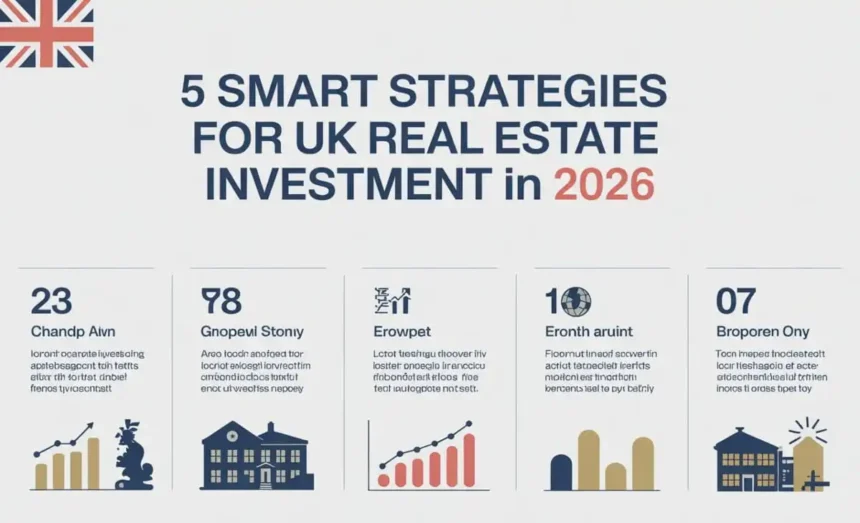
For 2026 and beyond, you cannot analyze potential properties using 2024 or 2025 data. The market has changed. You should analyze the Net Yield with respect to the 2026 updated property taxes and analyze the building’s “Tech-Readiness” score.
Data Points that are Crucial
- Gross Rental Yield: In these circumstances, 6.2% should be achieved by a healthy urban apartment.
- Occupancy: The absence of newly constructed homes has resulted in a 97% occupancy in areas with a strong demand.
- Capital appreciation: Suburban ‘lifestyle’ pockets are expected to see a consistent 4.5% growth over the next year and a half.
- Maintenance Reserve: Industry professionals recommend allocating 1.5% of annual rental income to maintain and upgrade smart home systems.
The Build to Rent (BTR) Model
The Model of Build to Rent (BTR) is a new trend with more popularity. Renting for a long time is more plausible with new efforts being made for long-term leasing. They will have new features to include a gym, a place to work with others, and even a garden on the roof. BTR properties have more stability and result in lower vacancy rates as opposed to single buy to let properties.
Staying on the Safe Side with Modern Property Deals
The lack of focus on “Cladding and Carbon” and their related issues is why most investors do not succeed. In 2026, there is a new mandate surrounding building safety and assessed carbon emissions will be in place. If you purchase a property prior to the 2027 retrofit requirements, every dollar you made will be consumed by construction. An environmental audit is essential prior to contract signing.
Financing Your Property Portfolio
Although interest rates have stabilized, a new focus has emerged with lenders on the “EPC” (Energy Performance Certificate) rating. Properties with a rating of A or B are promising for the lenders as they provide “Green Mortgages” with lower interest rates. An upfront investment in a quality asset will yield better financing options, especially over the course of 5 to 10 years.
Creating a Future-Proof Portfolio (Conclusion)
In 2026, the real estate market will be the most beneficial for the patient, and those people will be financially rational, driven by facts. Investors will benefit from focusing on energy efficient, positively located, and growing BTR investments. While digital entertainment and sites like บาคาร่าออนไลน์ are fun, nothing will be as financially beneficial as an appreciating asset like real estate. Invest time researching the most modern urban planning strategies. Develop the ability to differentiate between a good deal and a “cheap” deal that will end up costing you a lot more.